Acadia Runs on the Tide
Three of the best things in this park are gated by the tide, and low tide moves an hour later every day. Here is the one number to look up, and what to build around it.
Look up low tide. Build the day around it.
Most park itineraries are a schedule. Acadia’s cannot be, because low tide moves roughly an hour later each day — so the right thing to do at 2 PM on Tuesday is the wrong thing at 2 PM on Wednesday.
Bar Island and tidepooling need low tide. Thunder Hole needs high tide. Everything else in the park can move around them.
Check a Bar Harbor tide chart the night before. That one number decides your morning.
Bar Island, and the Nine-Hour Problem
A gravel bar to an island, exposed about three hours twice a day
Miss your return and the park puts it at nine hours before the bar is safe to walk again.
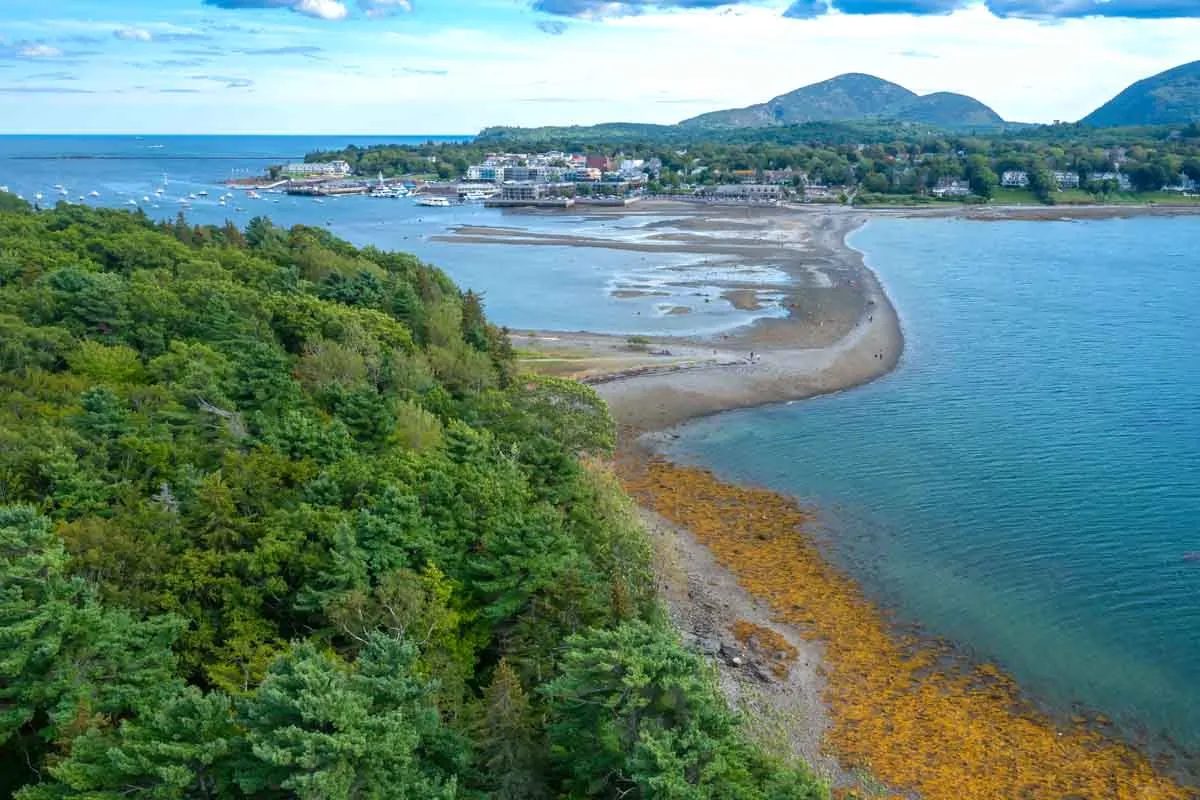
The trail starts at the bottom of Bridge Street in downtown Bar Harbor and runs 1.9 miles round trip across the sea floor to a wooded island, past boats sitting on mud that was ocean an hour earlier. It is the best free thing in Acadia and it does not feel like a national park at all.
People genuinely get stranded here. Not many, but every season, and the reason is always the same: the island is small enough that you believe you have longer than you do. The water comes back across the bar from both ends at once.
Set an alarm for your turnaround, not your start. If low tide is at 2 PM, you can cross from about 12:30 and you need to be back by about 3:30. Treat 3:00 as the deadline and the margin takes care of itself.
Why Thunder Hole Disappointed You
It needs high tide and weather — and most visitors arrive with neither
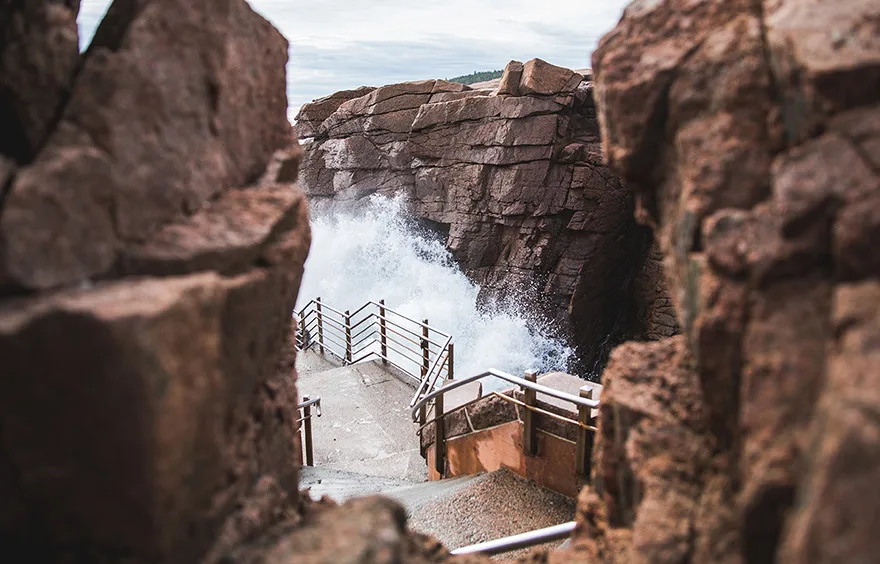
Thunder Hole is a narrow chasm in the granite where an incoming wave traps air in a small cave and forces it out with a boom you feel through the rock. When it works, it is extraordinary. Most of the time it is a wet crack in some granite with forty people photographing it.
The difference is timing. The best chance comes one to two hours before high tide, with the right wind and wave conditions behind it — so it needs the tide and the weather, and no amount of standing there will substitute for either.
If you only get one shot: look at the tide chart and the forecast together. High tide arriving behind a day or two of onshore wind is the combination worth rearranging an afternoon for. A calm day at low tide is not.
It sits directly on the Ocean Path between Sand Beach and Otter Point, so you will pass it regardless — which means there is no cost to checking the chart and doubling back at the right hour.
📍 Tidepooling and Bar Island want the same slot
Tidepooling runs the same window — 1.5 hours either side of low tide — which means it and Bar Island are competing for exactly the same three hours.
One per low tide. If you want both on the same trip, you need two days, or a day where both low tides fall in daylight.
The Coast Is Not Benign
Every park has one thing that genuinely hurts people. Here it is the ocean.
The Grand Canyon has heat. Rocky Mountain has altitude and lightning. Acadia’s granite coast looks like a place to scramble around on, and the wave that catches people is always bigger than the ones before it.
Never turn your back to the ocean
That is the park’s own wording, and it is worth carrying around with you. At Great Head the guidance is explicit: waves can reach three to five feet or higher, and you should check behind you before stepping backwards — which is exactly what people do while framing a photograph.
Wet granite is treacherous
The rock here is grippy when dry and genuinely slick when wet, and the zone nearest the water is wet because waves have been washing it. Seaweed on the lower rocks makes it worse. Stay above the wet line.
Stay well back from edges
Otter Cliffs run to 110 feet and the drop is abrupt. There is no railing along most of this coastline, and the granite slopes gently toward the water right up until it doesn’t.
The water is colder than it looks
Sand Beach at its warmest, in August, is 55 to 60°F. People go in. People do not stay in. Lifeguards are on duty seasonally, and dogs are off the beach through the summer months.
How to actually plan around it
The night before, look up the next day’s tide times for Bar Harbor. You want both lows and both highs.
If a low tide falls in daylight, that is your Bar Island walk or your tidepooling — pick one, and work backwards 1.5 hours to get your start time.
If a high tide falls in daylight and there is weather behind it, that is your Thunder Hole — aim for one to two hours before.
Everything else moves. The Park Loop Road, Jordan Pond, Cadillac, the carriage roads and every trail in the park are indifferent to the tide. Only these three care.
Practical Notes
- Low tide shifts roughly an hour later each day, so a plan built on yesterday’s chart is wrong by a full hour today.
- There are two low tides and two highs a day — often one of each falls in darkness, which is why some days simply do not offer a Bar Island window.
- Bar Island is 1.9 miles round trip from Bridge Street in Bar Harbor, on gravel bar and then an old dirt road.
- Thunder Hole is on the Ocean Path, between Sand Beach and Otter Point, so you can check it in passing and come back.
- Cell service is patchy in the park and gone in places — screenshot the tide chart rather than relying on loading it later.
- Storm surf is spectacular and more dangerous, not less. The days Thunder Hole performs best are the days the coast is least forgiving.
Acadia Tides FAQ
When can you walk to Bar Island?
From about 1.5 hours before low tide to 1.5 hours after — roughly a three-hour window, twice a day. The walk is 1.9 miles round trip from the bottom of Bridge Street in Bar Harbor.
Miss the window and the park puts it at nine hours before the bar is safe to cross again, so set an alarm for your turnaround rather than your start.
What happens if you get stuck on Bar Island?
You wait. The park’s figure is nine hours until the gravel bar emerges again safely. The island is small, there are no services, and attempting to wade or swim across a flooding tidal channel is how a bad afternoon becomes a dangerous one.
What is the best time to see Thunder Hole?
One to two hours before high tide, with wind and waves behind it. It needs both — a calm day at the right tide produces nothing, and the right weather at low tide produces nothing either.
Why was Thunder Hole so underwhelming?
Almost certainly the tide. At most points in the cycle there is simply nothing to hear, and waiting longer will not change it. Check the chart and come back one to two hours before the next high tide.
When is the best time for tidepooling in Acadia?
The same window as Bar Island — 1.5 hours either side of low tide. Which means the two compete for the same slot, and on a single-day visit you pick one.
How cold is the water at Sand Beach?
At its warmest, in August, 55 to 60°F. Lifeguards are on duty seasonally. Dogs are not allowed on the beach during the summer months.
Is it safe to scramble on the rocks along the Acadia coast?
With care and distance. Waves at Great Head can reach three to five feet or higher, granite becomes slick when wet, and there are no railings along most of the shore. The park’s standing advice is to never turn your back to the ocean and to check behind you before stepping backwards.
Where do I find Acadia tide times?
Any Bar Harbor tide chart will do, and the visitor center has them. Look up the next day’s times the night before and screenshot them — cell service inside the park is patchy and absent in places.
Planning the rest of the trip?
The 3-day Acadia itinerary — where the tide-dependent stops fit, plus a free printable PDF and the map.
The best hikes in Acadia — distances, durations and the iron rung trails handled honestly.
Cadillac reservations explained — the one thing in the park that needs booking.