2 Days at the Grand Canyon
The South Rim, properly — one day on the rim, one day below it, and the current conditions almost every other guide is getting wrong.
2026 is not a normal year at the Grand Canyon
A flash flood on August 29, 2026 closed the entire North Kaibab Trail, Phantom Ranch, Bright Angel Campground, and both Colorado River footbridges. There is no estimated reopening date. Rim-to-rim is currently impossible.
Water along Bright Angel Trail is currently off — including at the trailhead, 1½-Mile Resthouse, 3-Mile Resthouse and Havasupai Gardens. As of NPS’s September 10 update, only the South Kaibab Trailhead has water on. Some individual NPS trail pages still say water is on; those are stale.
The North Rim lost its lodge to fire in 2025 and has no in-park lodging and no potable-water system in 2026. See our North Rim page for what’s actually open.
This itinerary covers the South Rim, which is open and operating normally. Check the NPS Key Hiking Messages page before you hike — water status changes without notice.
Day one on the rim. Day two below it.
The South Rim takes about 90% of the park’s visitors and it’s the one that’s open year-round with full services. Two days is the sweet spot: enough to see the canyon properly from above, and enough to walk down into it.
Day one is viewpoints, the Rim Trail, and the historic village — no serious climbing, and it lets the altitude settle. The rim sits around 7,000 feet.
Day two goes below the rim, which is a genuinely different experience and the reason to give this park two days rather than one.
📍 Canyon hiking is backwards
Every mountain hike you’ve done starts with the climb. This one starts with the descent — which feels easy, right up until you have to climb out in the afternoon heat with tired legs.
That’s why NPS’s recommended turnaround points look conservative, and why it says plainly that hiking to the river and back in one day is dangerous and not recommended.
Before You Go
- $35 per private vehicle, valid 7 days. Entrance stations are cashless.
- No timed entry and no reservation needed to enter the park.
- Non-US residents: a $100 surcharge per person aged 16+ applies at Grand Canyon in 2026, unless you hold an eligible annual pass. This is new — older guides won’t mention it.
- The shuttle is free with park admission. No ticket, no reservation.
- No fuel in Grand Canyon Village. There is 24-hour pay-at-pump at Desert View, 25 miles east.
- In-park lodges book 13 months ahead. If you’re reading this with a trip soon, look at Tusayan, 7 miles south.
The Rim
Today is deliberately easy. The rim is around 7,000 feet, and if you’ve come from sea level you’ll feel it. Walking the rim rather than descending gives your body a day to adjust before tomorrow.
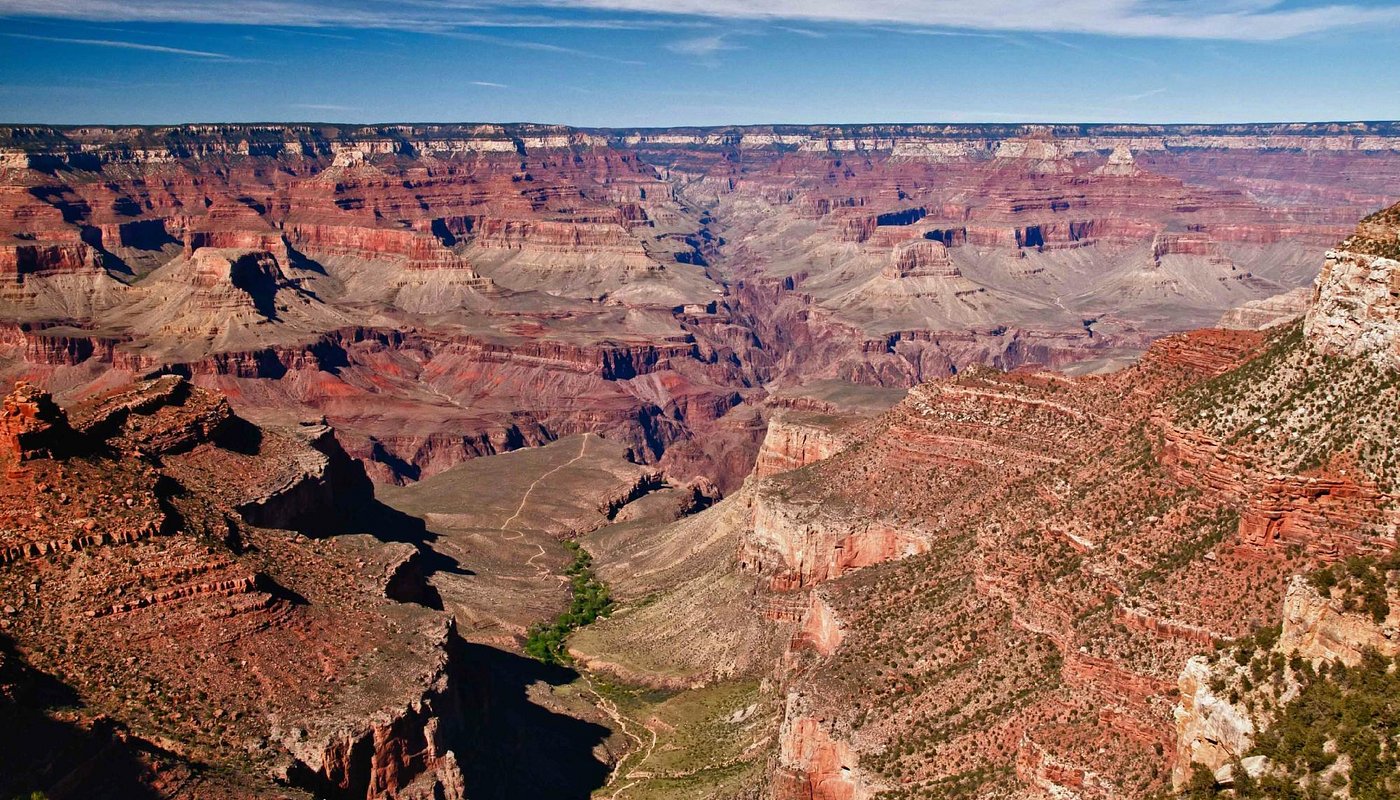
Mather Point
The closest big view to the visitor center, and where most people get their first sight of the canyon. Arrive before first light — the crowd builds fast and parking near the visitor center fills.
Visitor center
Worth the stop for current trail and water conditions, which change more here than at most parks. Pick up a shuttle map.
Rim Trail: Mather Point to Yavapai Point
The Rim Trail runs about 13 miles in total and you walk whatever part of it you like. This stretch is short, largely paved, and ends at the Yavapai Geology Museum, which is genuinely good.
Grand Canyon Village
The historic district — El Tovar, Hopi House, Lookout Studio, Kolb Studio, and Bright Angel Lodge. Walk it rather than drive; parking here is the worst in the park.
In the village
Several options around Bright Angel and Maswik lodges. Buy water for tomorrow while you’re here.
Hermit Road, by shuttle
Hermit Road is closed to private vehicles March 1 through November 30, so the red shuttle is how you get out there. Nine viewpoints along seven miles, and you can hop off and on.
Hermits Rest
The end of the road, and the Mary Colter building at the terminus is worth the look. Ride back and stop wherever appeals.
Hopi Point or Mohave Point
Both on Hermit Road, both west-facing, and both among the best sunset spots on the South Rim. Check the last shuttle time before you settle in — the red route runs a final sweep about an hour after sunset.
Every mountain hike starts with the climb. This one ends with it, in the afternoon heat, with tired legs.”
Below the Rim
The road to the South Kaibab Trailhead is closed to private vehicles. You reach it by shuttle, on foot, or by bike. The Hikers’ Express bus runs early departures specifically for this, and it’s how to do this hike properly.
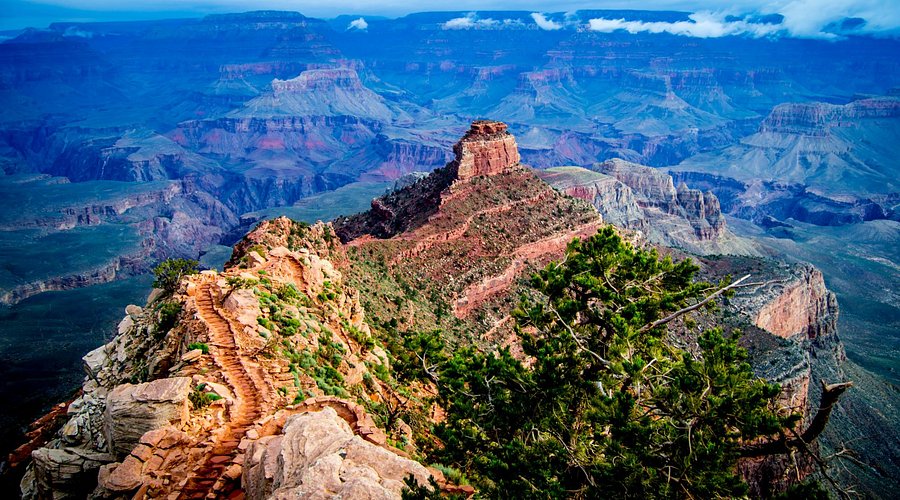
Hikers’ Express to South Kaibab
Early departures run from Bright Angel Lodge. Times shift by season — check the current schedule. Going early matters more here than almost anywhere.
Down South Kaibab
The trail follows an exposed ridgeline, which is why the views are extraordinary and also why there’s almost no shade. There is no water anywhere on this trail. Carry everything you need.
Ooh Aah Point or Cedar Ridge
Ooh Aah Point: 1.8 miles round trip, 790 feet, 1–2 hours. The first big view and a reasonable target for most people.
Cedar Ridge: 3 miles round trip, 1,120 feet, 2–4 hours. Further, and there are toilets at the top.
NPS describes both as Steep — that’s a route description, not a difficulty rating. Skeleton Point at 6 miles round trip and 2,040 feet is further than we’d recommend on a two-day trip, and NPS says to consult a ranger before attempting it as a day hike.
Climb out
The climb takes roughly twice as long as the descent. In dangerous summer heat, NPS says do not hike between 10 AM and 4 PM — which is the real reason for the early start.
Back in the village
Eat properly. You’ve just climbed a thousand feet or more.
Desert View Drive
25 miles east, and open to private vehicles unlike Hermit Road. Grandview Point, Moran Point and Lipan Point are the standouts, and the canyon looks completely different from this end.
Desert View Watchtower
Mary Colter’s 1932 tower at the eastern end of the park, with views down to the Colorado. There’s also 24-hour pay-at-pump fuel here — the only fuel in the park.
Lipan Point or Desert View
Fewer people than the village viewpoints, and the Colorado is visible from both.
Five Things NPS Wants You to Know
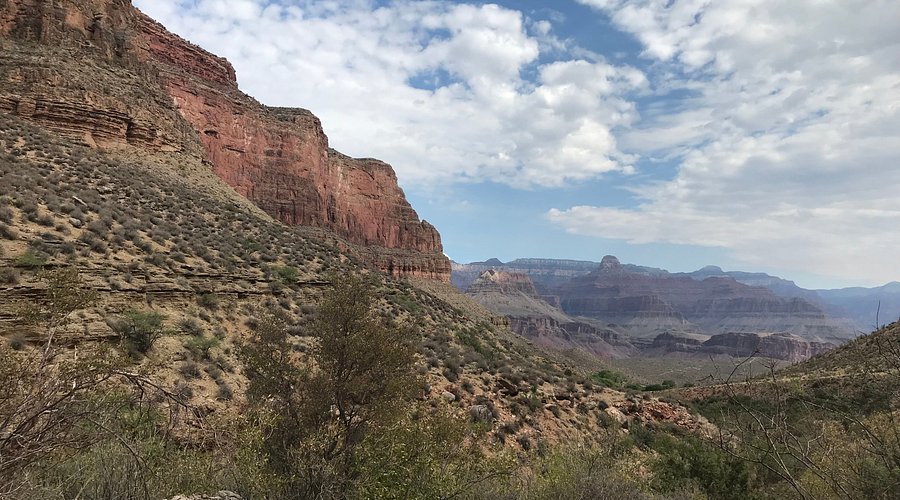
Don’t hike between 10 AM and 4 PM
That’s NPS’s current wording during dangerous summer heat — an instruction, not a suggestion. The inner canyon commonly exceeds 100°F.
It gets hotter as you descend
Temperature rises roughly 5.5°F for every 1,000 feet of elevation lost. Summer highs at the river average around 30°F hotter than the rim. A pleasant morning at the top is a dangerous afternoon at the bottom.
South Kaibab has no water. At all.
No water anywhere on the trail. Bright Angel has water infrastructure, but it’s seasonal — normally mid-May to mid-October at the resthouses — and it’s currently switched off.
A water fountain doesn’t mean there’s water
The Transcanyon Waterline fails. NPS tells hikers that water status can change suddenly and to carry a reliable treatment method even where water is normally available. Right now that warning is playing out along the whole of Bright Angel.
Drinking too much water is also dangerous
This is the one nobody writes. NPS specifically warns against forcing fluids, because overhydration causes hyponatremia, which is life-threatening. The advice is to drink when thirsty, stop when quenched, and replace salt and calories as well as water.
The rims are not twenty minutes apart
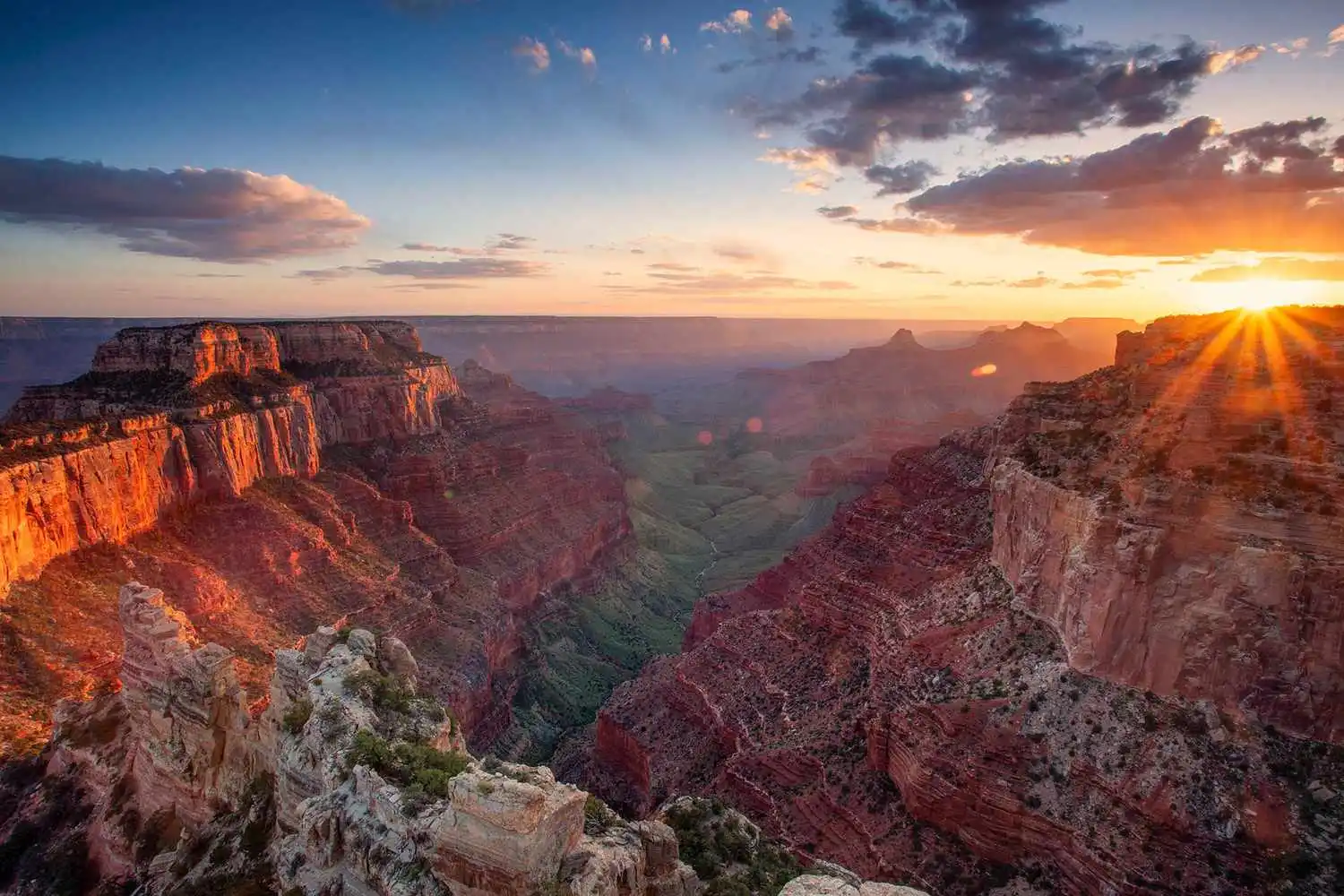
The canyon averages about ten miles across. You can see the North Rim from the South Rim. Driving between them is roughly 212 to 220 miles and four and a half to five hours.
NPS itself gives four different figures across four of its own pages — 212 miles and 4½ hours on the directions page, 220 and five hours on the FAQ and the places page, 215 and five hours on the camping page. We’re not going to pick one.
And in 2026 the North Rim has no in-park lodging and no potable-water system following the 2025 fire. It isn’t a day trip from the South Rim and it isn’t a normal season.
Practical Notes
- The shuttle is free and needs no ticket. Four routes, and the Tusayan route runs summer only.
- South Kaibab Trailhead and Yaki Point are closed to private vehicles. Shuttle, foot or bike only.
- Hermit Road is closed to private vehicles March 1 to November 30. December to February you can normally drive it.
- Shuttle schedules are seasonal and change between summer and fall. Check current times rather than relying on any guide, including this one.
- The rim is around 7,000 feet. If you’ve come from sea level, take day one gently.
- Mather Campground is open year-round, bookable six months ahead. Desert View Campground runs April to October.
Grand Canyon FAQ
Do you need a reservation for the Grand Canyon?
No. NPS states plainly that there’s no timed entry and no reservation needed for entry. It’s $35 per private vehicle for seven days, and entrance stations are cashless. Camping, lodging and backcountry trips have their own separate systems.
Is the North Rim open in 2026?
Partially. Roads reopened May 15 and the campground June 1, but the 2025 Dragon Bravo Fire destroyed the Grand Canyon Lodge and 114 buildings. There’s no in-park lodging and no potable-water system this season. Bring your own water.
Can you hike rim to rim right now?
No. An August 29, 2026 flash flood closed the entire North Kaibab Trail, Phantom Ranch, Bright Angel Campground and both Colorado River footbridges, with no estimated reopening date. A separate North Kaibab construction closure was already scheduled from October 15 into early 2027.
Is two days enough?
For the South Rim, yes — one day on the rim and one below it covers it properly. Three days lets you do Desert View more slowly or attempt a longer hike. One day works if you’re passing through, but you’ll stay on the rim.
Which trail should I hike?
South Kaibab for the views — it follows an exposed ridge and the scenery is better. Bright Angel for shade and water infrastructure, though that water is seasonal and currently off. Neither has water you can rely on right now.
Can you hike to the river and back in a day?
NPS says it’s dangerous and not recommended, and that’s a specific recommendation rather than generic caution. It’s roughly 5,000 feet of elevation change each way, with temperatures around 30°F hotter at the bottom.
Is there gas in the park?
Not in Grand Canyon Village. There’s 24-hour pay-at-pump fuel at Desert View, 25 miles east, and at the North Rim during its season. Saying there’s no gas in the park would be wrong — saying there’s none in the village is correct.
How far ahead do the lodges book?
Thirteen months for the in-park rim lodges — El Tovar, Bright Angel, Kachina, Thunderbird, Maswik and Yavapai. Phantom Ranch is different again, with a lottery 15 months ahead, and it’s currently closed.
Coming from Utah?
Plenty of people pair the Grand Canyon with the Utah parks. Zion is the usual companion, and our Mighty 5 road trip covers all five Utah national parks if you’re building a longer loop.